
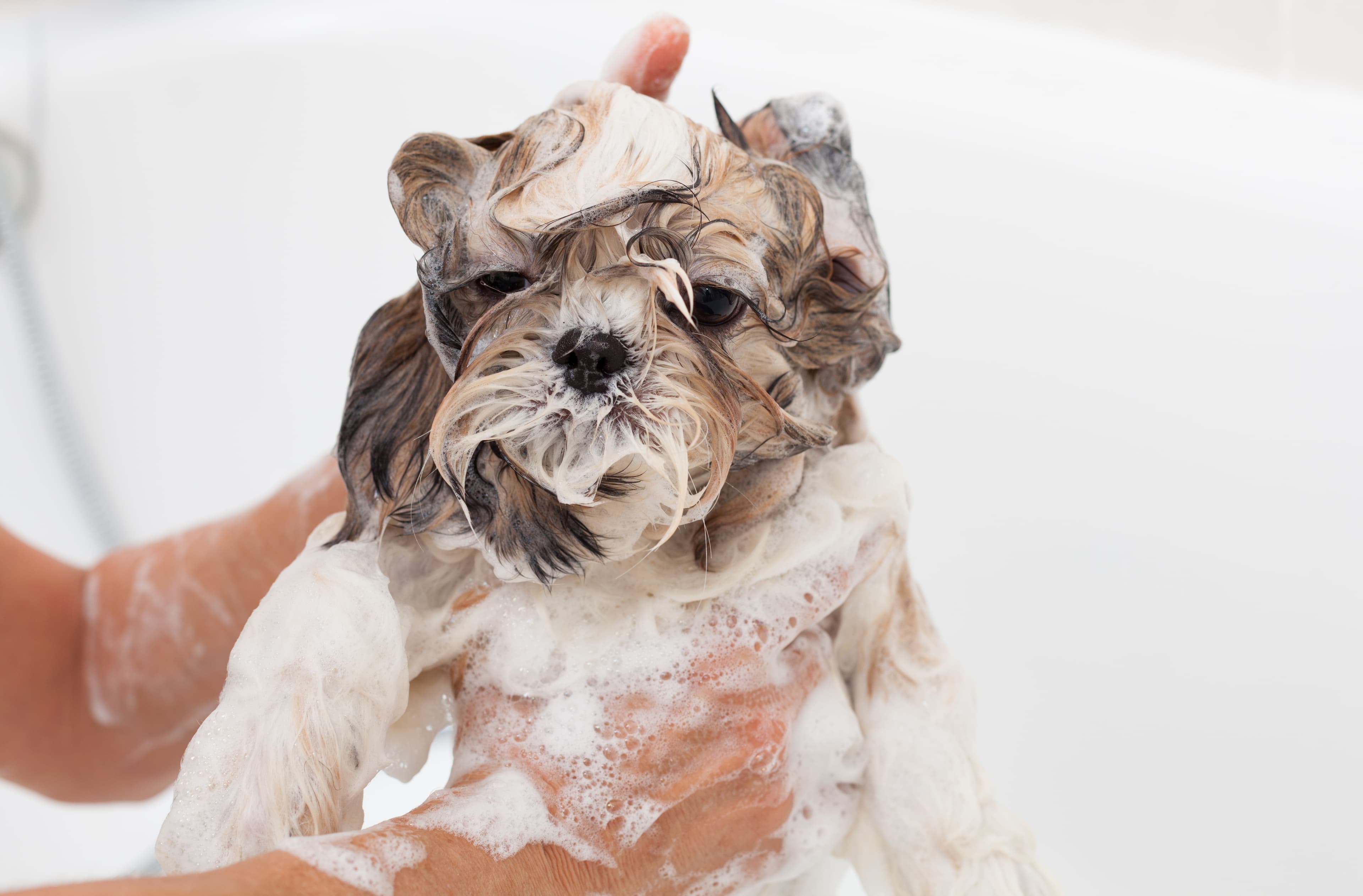
“Can I use human shampoo on my dog or cat?”
To be blunt: absolutely not recommended.
Humans and pets differ greatly in skin structure, pH, sebum secretion, and immune response.
Using a human product without accounting for these differences can lead to skin problems such as itching, dandruff, and contact dermatitis.
Let's look at exactly what the differences are and which shampoo to choose.
1. Skin pH: A Fundamental Difference
Human skin is acidic (pH 4.5–5.5),
whereas a dog's or cat's skin is neutral to mildly alkaline (pH 6.2–7.4).
Using human shampoo on a pet can have its acidity break down the skin barrier.
This can worsen bacterial infections or allergies.
Reference: Ferguson et al., 2011. Veterinary Dermatology
2. Surfactants: It's Less About “how much you clean” than “how much you protect”
Human shampoos commonly contain strong cleansing agents such as SLS and SLES.
But pets have much thinner skin and far less sebum.
Strong cleansing power can actually dry the skin further and trigger itching and inflammation.
For pet shampoos, the following ingredients are recommended:
| Ingredient | Characteristics |
|---|---|
| Sodium cocoyl glutamate | Very mild cleansing, naturally derived |
| Decyl glucoside | Almost no skin irritation |
| Sodium cocoamphoacetate | Effective at protecting the skin barrier |
3. Moisturizers: More Than Just Adding Water
Even after shampooing, ingredients that soothe the skin and restore the barrier are needed.
Especially for pets with atopy or allergies, the moisturizing ingredients in a shampoo become an extension of skin treatment.
| Ingredient | Action | Characteristics |
|---|---|---|
| Panthenol | Soothing + moisturizing | Highly safe |
| Ceramide | Barrier restoration | Excellent for atopic skin |
| Beta-glucan | Immune stabilization | Naturally derived |
| Aloe vera | Anti-inflammatory effect | Efficacy varies with freshness |
4. Fragrance: “Unscented” Is Actually Best
Strong artificial scents may be pleasant to humans,
but for scent-sensitive pets they can be stressful.
In severe cases, fragrance can even cause reduced appetite or anxious behavior.
In particular, fragrances containing ‘phthalates’ have been reported as having potential endocrine-disrupting effects.
Reference: Dodson et al., 2007. Phthalates and endocrine disruption in animal models
A Vet's Tips for Choosing a Shampoo
Just remember these four points:
- Check that the pH is neutral: look for ‘pH 7.0±0.5’
- SLS/SLES-free: look for ‘Sulfate-Free’
- Whether it is unscented or uses natural fragrance
- Contains moisturizing ingredients: ceramide, panthenol, etc.
Finally
A pet's skin is the largest immune organ, covering the entire body.
The first step in protecting this delicate skin is the shampoo.
Human shampoo is made for human skin, not for our pets.
Choose a shampoo suited to your pet's skin condition, and be sure to consult a veterinarian when needed.