
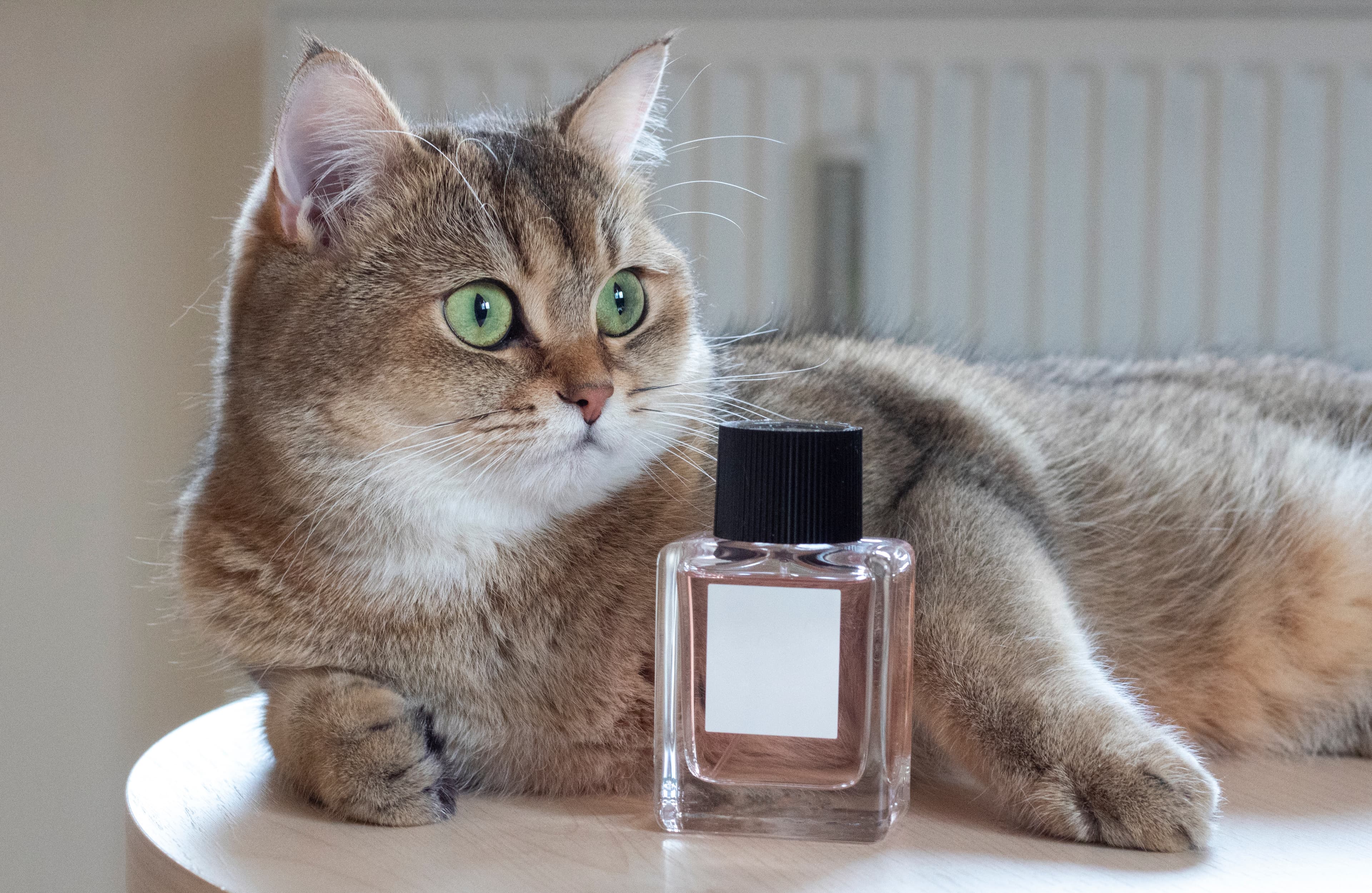
Perfume Is Not Good for Cats.
Perfume contains a lot of alcohol and plant oils. If perfume splashes onto a cat while you spray it on yourself, or it is sprayed in a space the cat occupies and the cat then licks it, problems can arise.
Cats cannot break down essential-oil components. This leads to liver damage, nervous-system abnormalities, vomiting, and respiratory problems.
Notable harmful components: tea tree, eucalyptus, citrus, peppermint, mint, and wintergreen can be toxic to cats.
Diffusers and Scented Candles Are Far More Dangerous.
- Whereas perfume is sprayed temporarily, diffusers and scented candles continuously disperse into the air.
- Especially when used in an enclosed indoor space, cats breathe in the harmful components or absorb them through the skin over a long period.
- Some cats become stressed by the scent and show abnormal behavior such as reduced appetite, vomiting, hiding in corners, or excessive grooming.
How to Use Scented Products ‘Wisely’ with Cats
If giving up scented products entirely is difficult,
be sure to follow these basic rules.
| Usage Rule | Explanation |
|---|---|
| 1. No use in the cat's spaces | Never use them near the cat tower, resting areas, or litter box. |
| 2. Ventilation is essential! | Open windows to circulate air and prevent harmful components from accumulating in the cat. |
| 3. Choose low-concentration, unscented, or pet-safe products | Check for a Pet Safe certification. |
| 4. Check for abnormal behavior in your cat | If the cat hides, vomits, or loses appetite after using scented products, stop use immediately. |
In These Situations, Go to the Hospital Immediately!
If a cat licks or eats perfume, a diffuser, a scented candle, etc., or
shows abnormal symptoms (drooling, vomiting, lethargy, seizures, shortness of breath, etc.),
you must take it to an animal hospital immediately.
In particular, among essential oils, tea tree oil poisoning
can cause symptoms at amounts under even 0.1 mL/kg,
so it must never be underestimated.
For Cats, ‘Scent’ Can Be Stress Rather Than Healing
A cat's sense of smell is dozens of times more sensitive than a human's.
What is a subtle scent to us can be a suffocating assault to a cat.
People and cats share the same space,
but please remember that their sensory systems and metabolic capacities are completely different.
In a home shared with a cat, even ‘scent’ requires careful choice and consideration.